2026-09-01 · Dave Hendricks
Troubleshooting No Heat Calls in Waubun After a Cold Snap
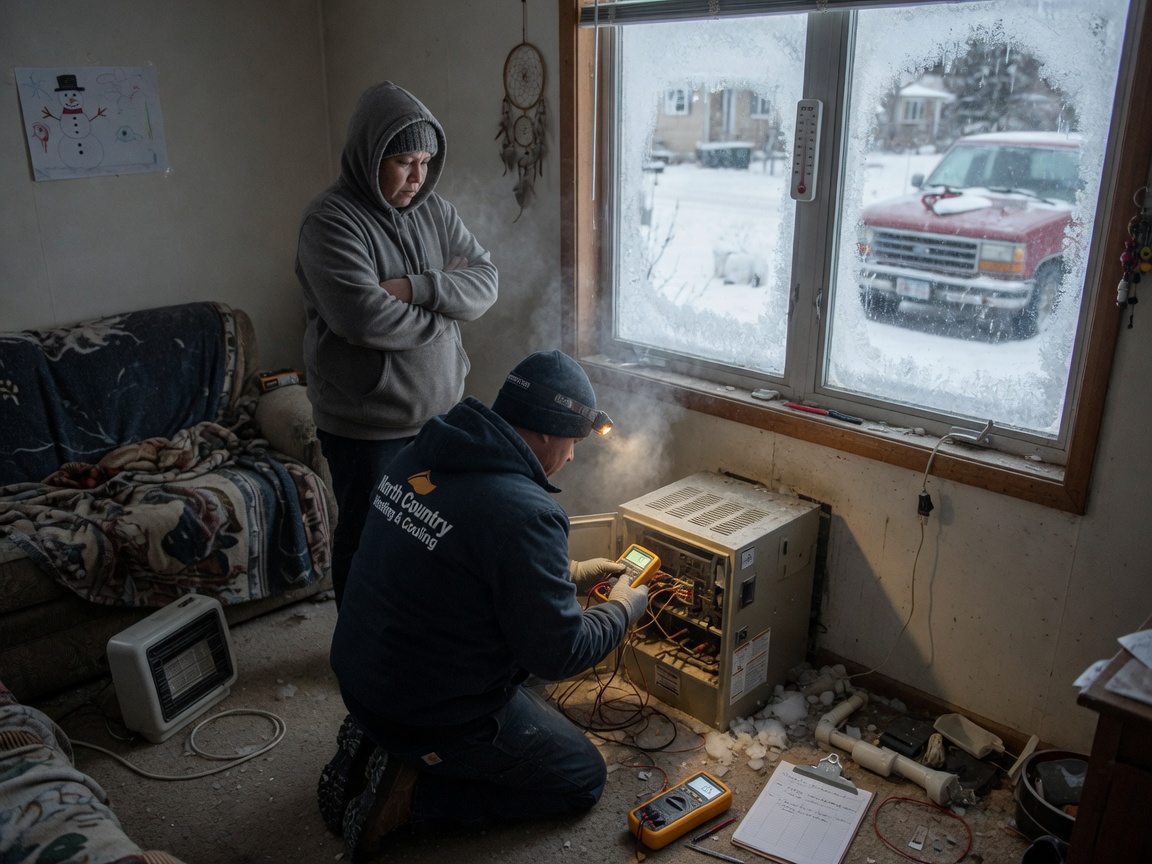
After a cold snap drops temperatures below zero across Waubun and Mahnomen County, the most frequent no-heat problems trace to furnace ignition failures, clogged filters, or blower motor strain in older rural homes. Start by confirming the thermostat is set to heat mode and calling for 5–10 degrees above room temperature, then verify power at the unit and breaker panel before moving to airflow or fuel checks.
Checking Thermostat and Power Supply First
Verify the thermostat display is active and batteries are fresh, as cold snaps can drain them quickly in Waubun homes. Set the fan to auto and raise the temperature setting by 5 degrees to test if the furnace responds within 30–60 seconds. If nothing happens, locate the furnace switch near the unit at 1259 1st St area homes and confirm it is on, then check the main breaker panel for tripped circuits that often occur when outdoor temps plunge. Test a nearby outlet with a lamp to rule out whole-home power loss before proceeding. In many Mahnomen County properties with 1970s–1990s wiring, loose connections at the disconnect box worsen during rapid temperature drops, so inspect for corrosion or loose wires with the power off. These initial steps resolve 20–30% of no-heat calls without tools.
Inspecting Air Filters, Vents, and Blower Operation
Remove and examine the air filter, replacing it if it is gray or clogged, because restricted airflow after a cold snap causes the furnace to overheat and shut down on safety limit. Walk through each room and confirm supply vents are open and unobstructed by furniture or rugs common in Waubun ranch-style homes. Listen at the furnace for the blower motor running; if it hums but produces no air, the belt or capacitor may have failed from the sudden load. Clean return-air grilles with a vacuum to restore full airflow, then restart the system and monitor for 10 minutes. Rural homes near Ogema and Bejou often accumulate more dust from gravel roads, so filters clog faster during winter. If the blower still fails to engage after these steps, note any error codes on the control board for the technician.
Diagnosing Ignition and Pilot Problems in Cold Weather
Many Waubun furnaces use hot-surface igniters that crack when temperatures swing sharply, preventing gas from lighting after a cold snap. Turn the thermostat up and watch through the sight glass for the igniter to glow orange within 30 seconds; absence of glow points to a failed igniter or control board issue. For standing-pilot models still found in older Mahnomen County homes, check that the pilot flame is blue and steady rather than yellow or flickering from drafts. Listen for the gas valve click; if it clicks but no flame appears, gas supply or valve problems may exist. Never attempt to relight a pilot yourself if you smell gas. These cold-weather ignition failures account for most after-hours calls in the area during January and February.
Knowing When to Schedule Furnace Repair
If basic checks do not restore heat within 30 minutes, contact Waubun HVAC Pros for Furnace Repair rather than risking further damage to the heat exchanger. Persistent issues after a cold snap often involve the blower motor, which rural Waubun homeowners frequently replace at documented costs detailed in What Rural Waubun Homeowners Pay for Furnace Blower Motor Replacement. For true emergencies outside normal hours, use the 24/7 line while keeping the system off to avoid carbon monoxide risks. Technicians carry common igniters and filters on trucks serving Thief River Falls and Park Rapids routes, reducing return visits. Document any error codes or sounds before the visit to speed diagnosis.
Preventing Repeat No-Heat Calls Next Winter
Schedule HVAC Maintenance each fall to clean burners, test safety switches, and verify inducer motors before the first deep freeze. In Waubun’s older housing stock, adding a programmable thermostat helps avoid sudden load spikes during cold snaps. Keep snow cleared from outdoor intake and exhaust pipes on high-efficiency units to maintain proper venting. Homeowners in nearby Ada and Fertile report fewer mid-winter failures after annual tune-ups that catch weak igniters early. Consistent filter changes every 60–90 days during heating season further reduce stress on the entire system.